
Deadlock at the Strait:
10 Reasons a U.S.-Iran Breakthrough is Unlikely by May 31st

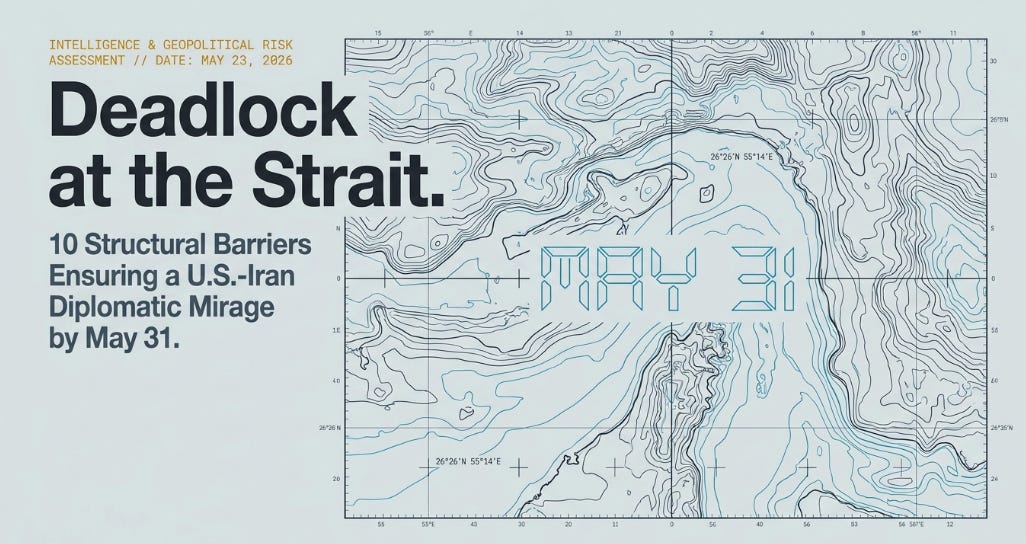
IA Image N.º1
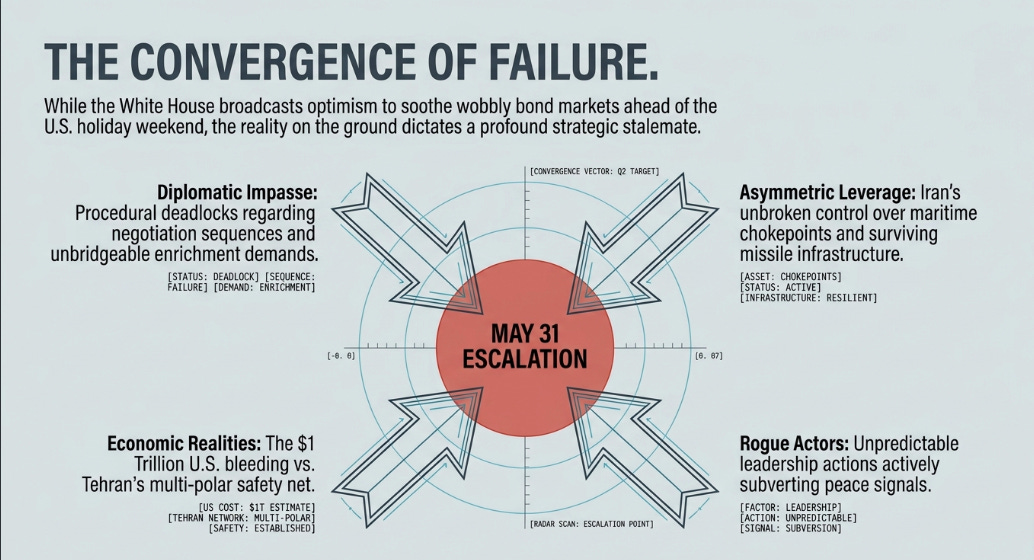
As of May 23, 2026, the geopolitical clock is ticking toward a volatile May 31st deadline. While the White House broadcasts signals of optimism to soothe wobbly bond markets, the reality on the ground—and in the water—suggests a profound strategic stalemate. With a long holiday weekend approaching in the United States, a period traditionally favored for military de-escalation or sudden strikes to minimize market shock, the stakes could not be higher.
The following intelligence-grade assessment details the ten structural barriers ensuring a diplomatic breakthrough remains a “mirage” before the month’s end.
IA Image N.º2
1. The Critical Impasse of Sequencing: The “Two-Track” Trap
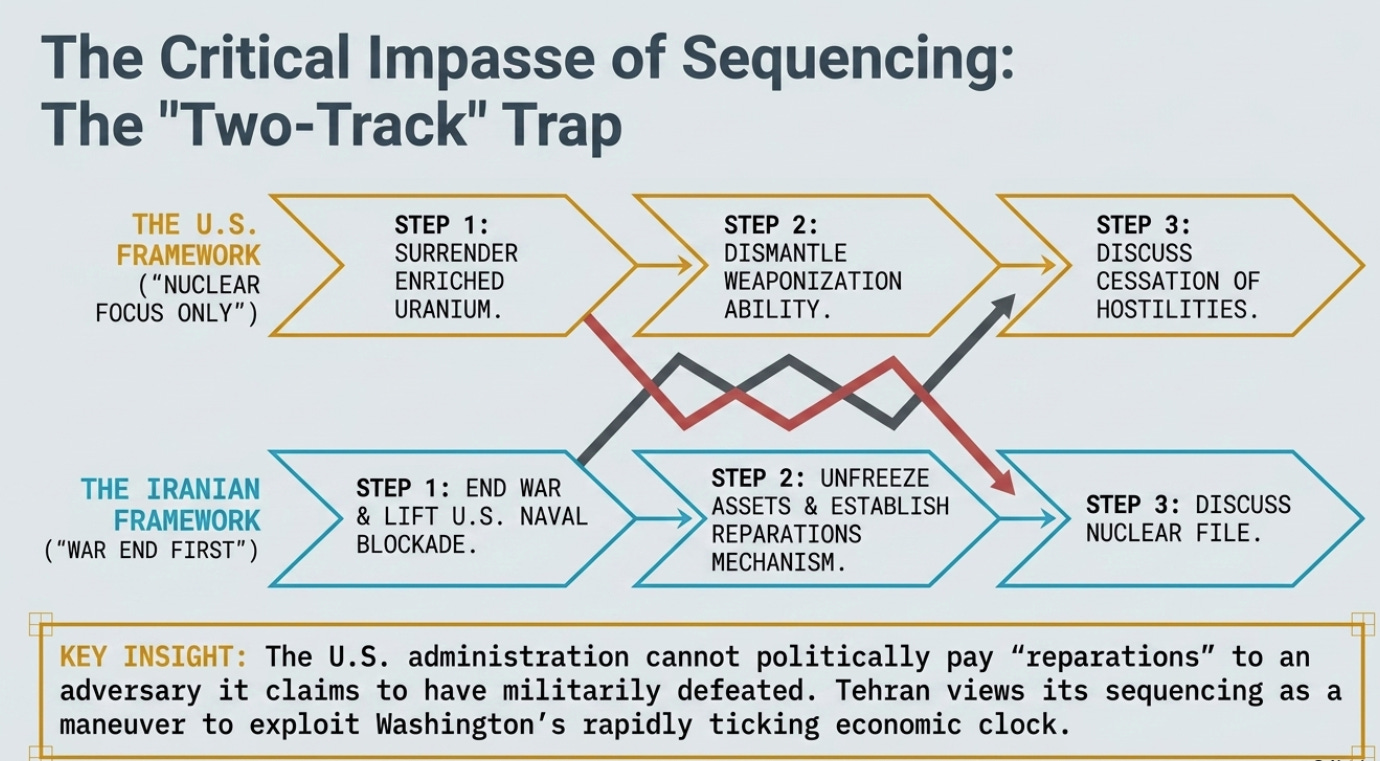
The fundamental hurdle is not the content of a potential deal, but the “order of operations.” Diplomacy is currently frozen by a disagreement over the “Two-Track” framework—a disconnect that separates the cessation of hostilities from the resolution of the nuclear file. This is not merely a procedural delay; it is a deliberate Iranian tactical maneuver based on the belief that Washington’s economic clock is ticking faster than Tehran’s military one.
IA Image N.º3
The Sequencing Conflict:
The Iranian Framework (”War End First”): Tehran demands a formal declaration ending the war, an immediate lift of the U.S. naval blockade, and the release of frozen assets. Nuclear negotiations would only follow a returned status quo ante.
The U.S. Framework (”Nuclear Focus Only”): The Trump administration insists on a “Nuclear-First” track, demanding Iran surrender its enriched uranium and dismantle its “ability to create a weapon” as a prerequisite for any talk of ending the war.
2. The “Big Prize”: Sovereignty and Tolls in the Strait of Hormuz
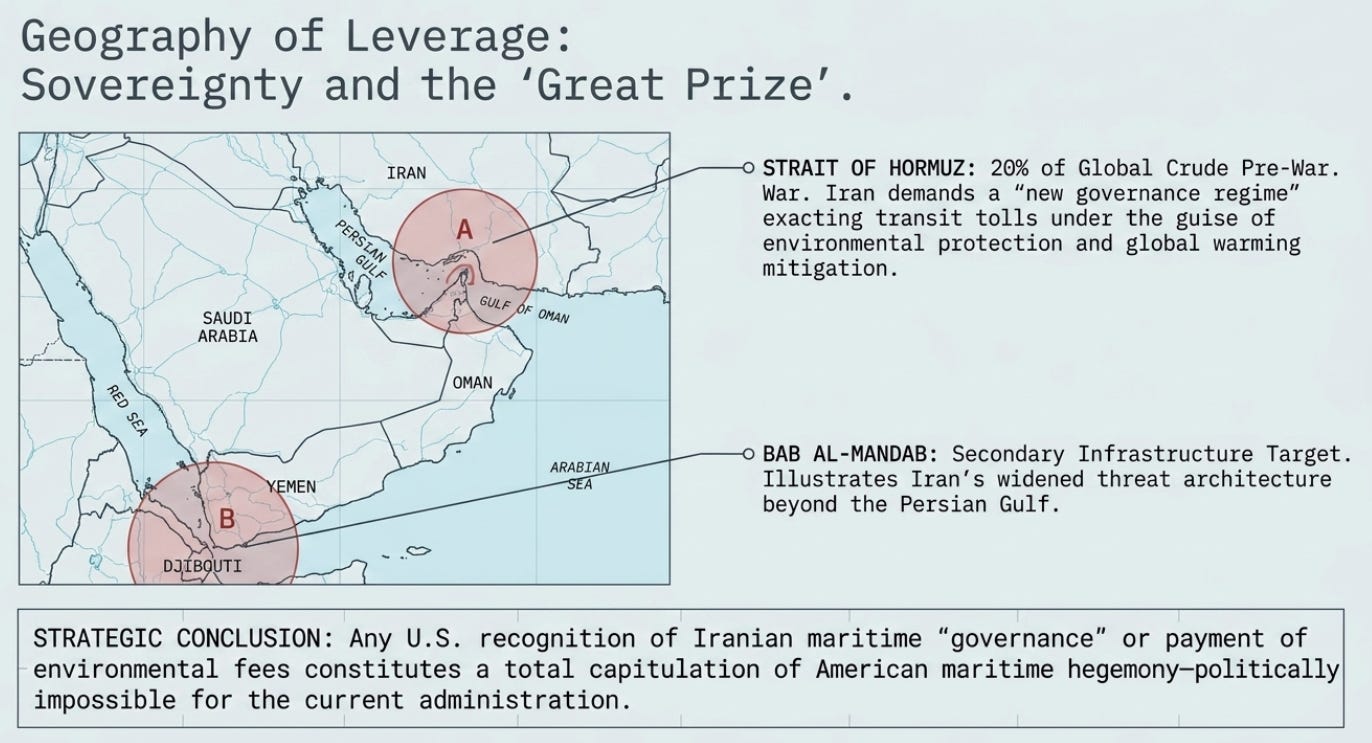
The Strait of Hormuz is the ultimate leverage point. Tehran views its current control over this artery—where 20% of global crude transited pre-war—as a “great prize” it will not relinquish without massive concessions. Iran has shifted from simple threats to proposing a “new governance regime” that includes transit fees under the guise of “environmental protection” and “global warming mitigation.”
Any U.S. recognition of Iranian “governance” or the payment of maritime fees would constitute a total capitulation of American maritime hegemony. Furthermore, Tehran has widened the scope, threatening a “war of infrastructure” targeting a second chokepoint: the Bab al-Mandab strait. This dual-threat architecture makes a quick resolution by May 31st politically impossible for an administration allergic to the optics of “surrender.”
IA Image N.º4
3. The Urgency Asymmetry: The $1 Trillion Ticking Clock
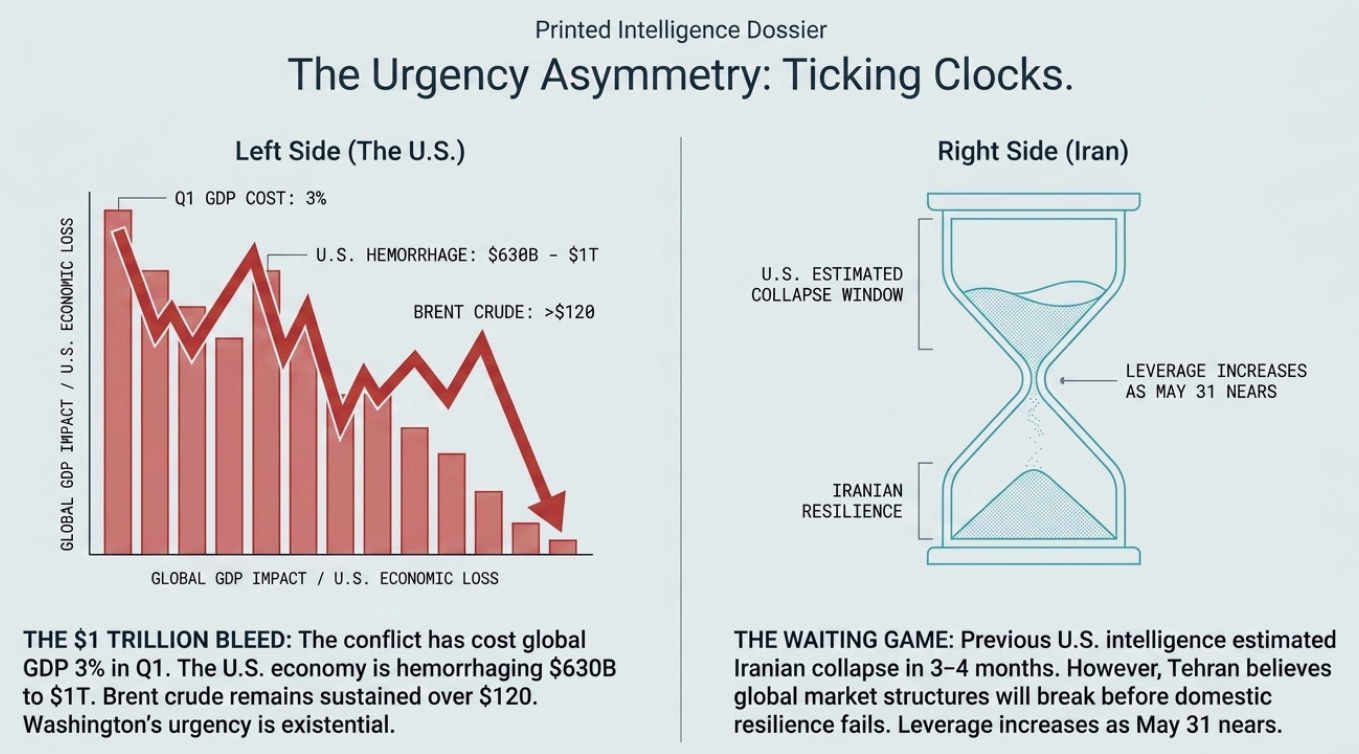
Washington is racing against a global economy “on the verge of something very bad.” The conflict has already cost the global GDP three percentage points in a single quarter, with the U.S. economy alone hemorrhaging between $630 billion and $1 trillion. With Brent crude sustained over $120, the U.S. sense of urgency is existential.
Tehran, however, is playing the “waiting game.” While U.S. intelligence previously estimated Iran could only last four months (a window now narrowed to three), Iranian officials believe the global market will collapse before their domestic resilience fails. Tehran perceives that its leverage only increases as the May 31st deadline nears, removing any incentive for a pre-emptive compromise.
IA Image N.º5
4. Asymmetric Resilience: The Failure of “Operation Epic Fury.”
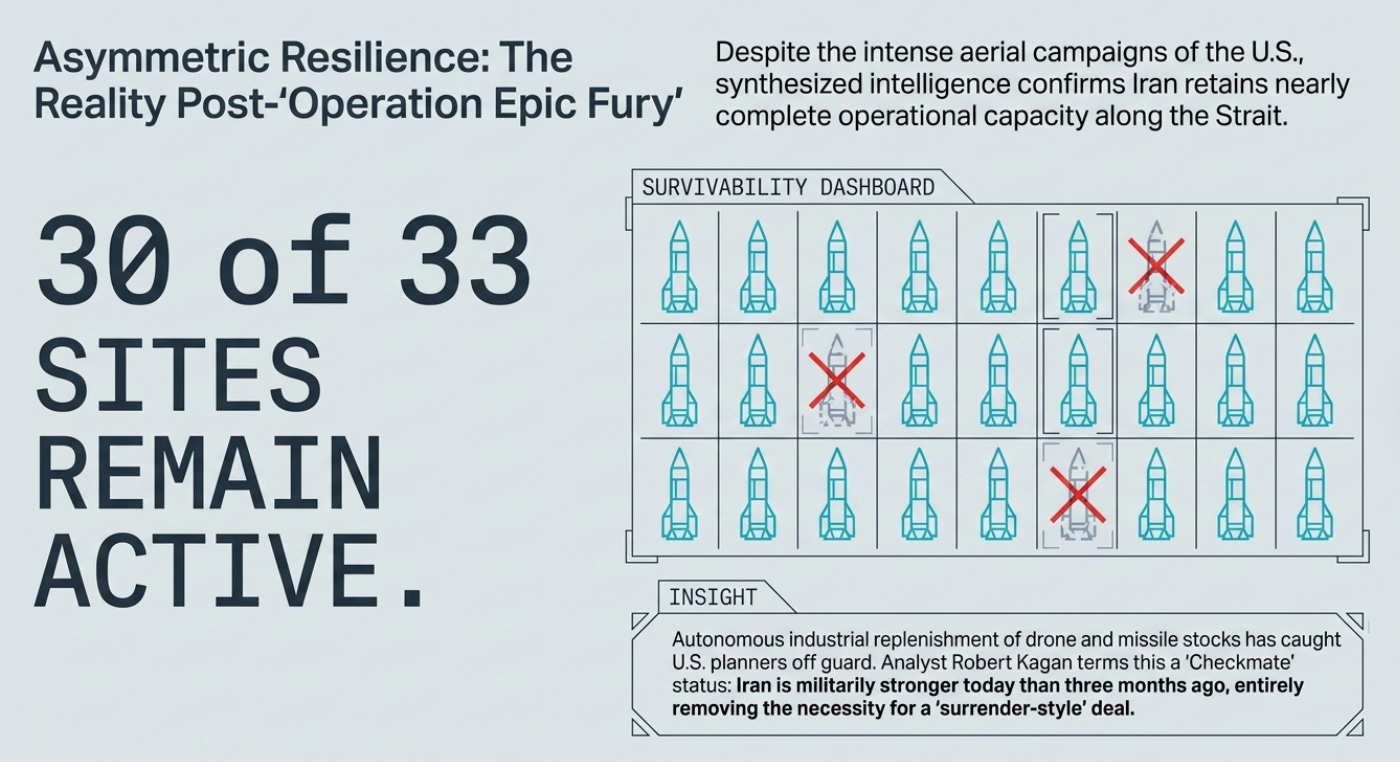
The administration’s narrative of a “defeated” Iran is belied by intelligence reports. Despite the intense aerial campaigns of “Operation Epic Fury,” synthesis of data from the New York Times and Washington Post indicates that Iran retains access to 30 of its 33 missile sites along the Strait.
IA Image N.º6
Iran’s autonomous industrial potential has allowed it to replenish missile and drone stocks at a speed that has caught U.S. planners off guard. Strategically, Iran is militarily stronger today than it was at the war’s outset three months ago. This “Checkmate” status (as analyst Robert Kagan suggests) removes the necessity for Iran to accept what it views as a “surrender-style” deal.
5. The “Red Flag” Syndrome: Peace Signals as Disinformation
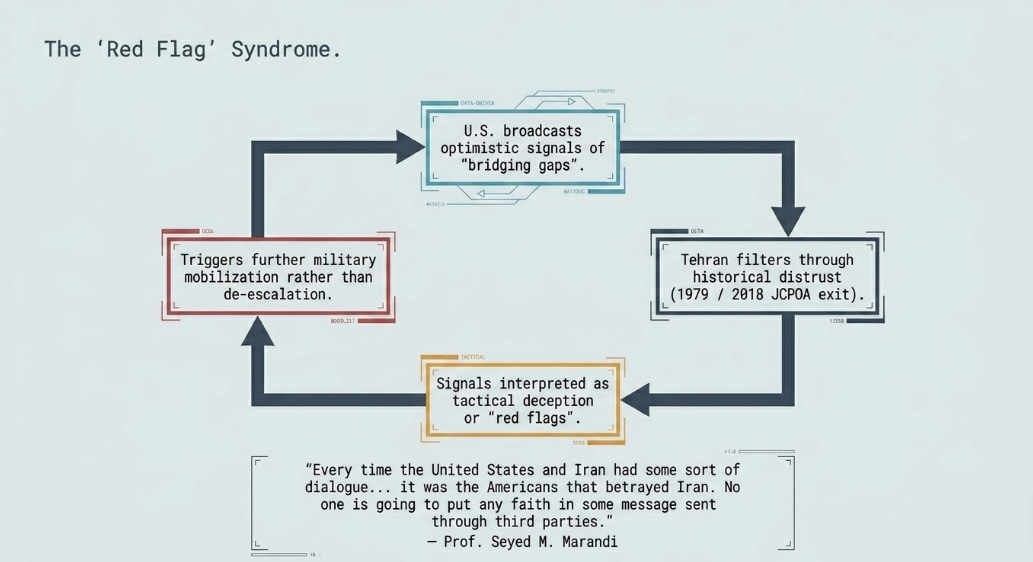
In Tehran, optimistic signals from the White House are viewed as tactical deceptions. Iranian officials, including Professor Seyed M. Marandi, interpret U.S. talk of “bridging gaps” as a “red flag” meant to lull their defenses before a decisive strike.
“Every time the United States and Iran had some sort of dialogue... it was the Americans that betrayed Iran. There’s great suspicion here. No one is going to put any faith in some message sent through third parties.”
This deep-seated trust deficit, rooted in perceived betrayals since 1979 and the 2018 exit from the JCPOA, ensures that every diplomatic overture acts as a trigger for further military mobilization rather than a path to agreement
IA Image N.º7
6. The Trump “Wild Card” and the Wedding Signal
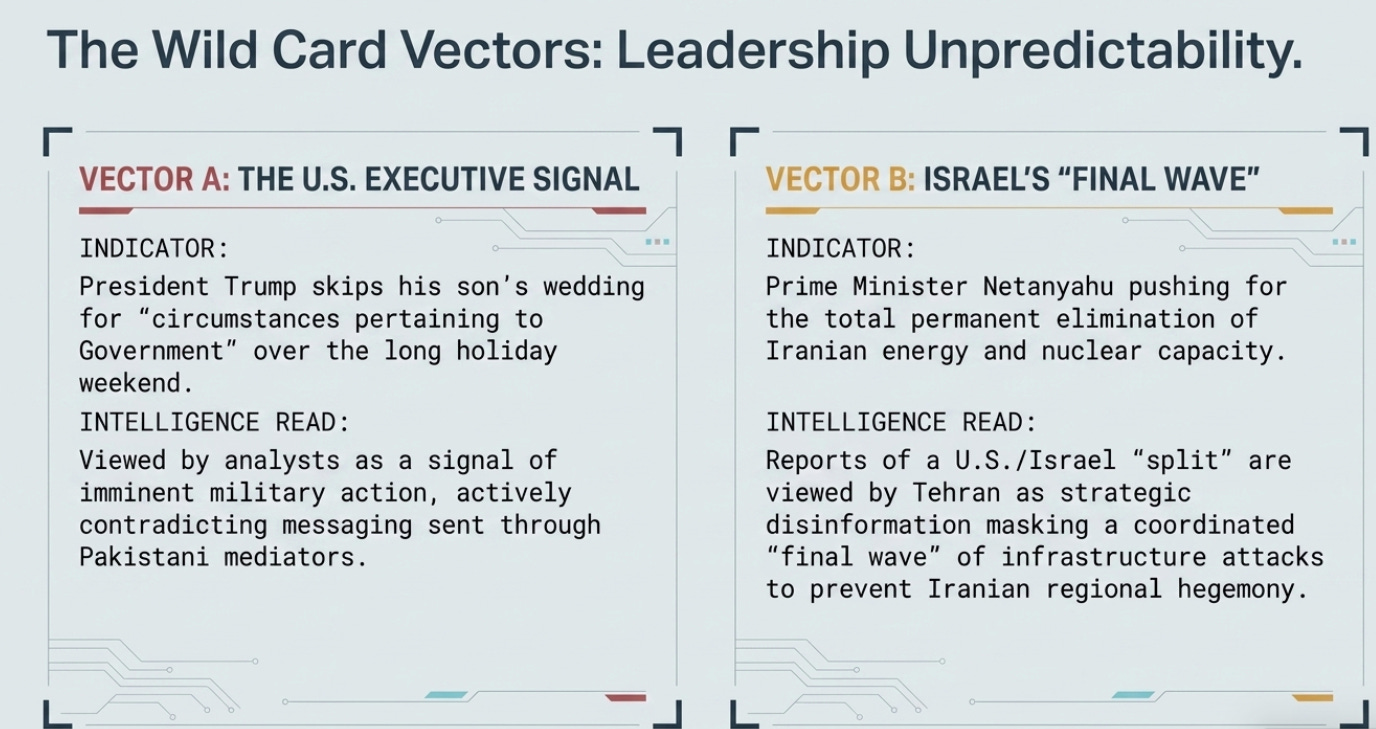
President Trump’s personal political decisions remain a primary barrier to a stable negotiating environment. Negotiators cannot place faith in a process where the messaging through Pakistani mediators is contradicted by the President’s own actions.
Crucially, Trump’s recent decision to skip his son’s wedding to remain in D.C. over the long weekend—citing “circumstances pertaining to Government”—is viewed by intelligence analysts as a signal of imminent military action rather than a diplomatic breakthrough. This unpredictability prevents the creation of a credible foundation for a deal by May 31st.
IA Image N.º8
7. The Shadow of Israel: Netanyahu’s “Final Wave.”
Prime Minister Netanyahu remains a significant constraint on Trump’s diplomatic maneuverability. Israel’s strategic interest is the destruction of Iranian energy infrastructure and the permanent elimination of its nuclear capacity.
Reports of a “split” between Trump and Netanyahu are viewed by Tehran as strategic disinformation designed to mask a coordinated “final wave of decisive attacks” before the month’s end. Iran expects a “war of infrastructure” to escalate rather than dissolve, especially as Israel pushes for a conclusion that prevents Iran from emerging as a regional superpower.
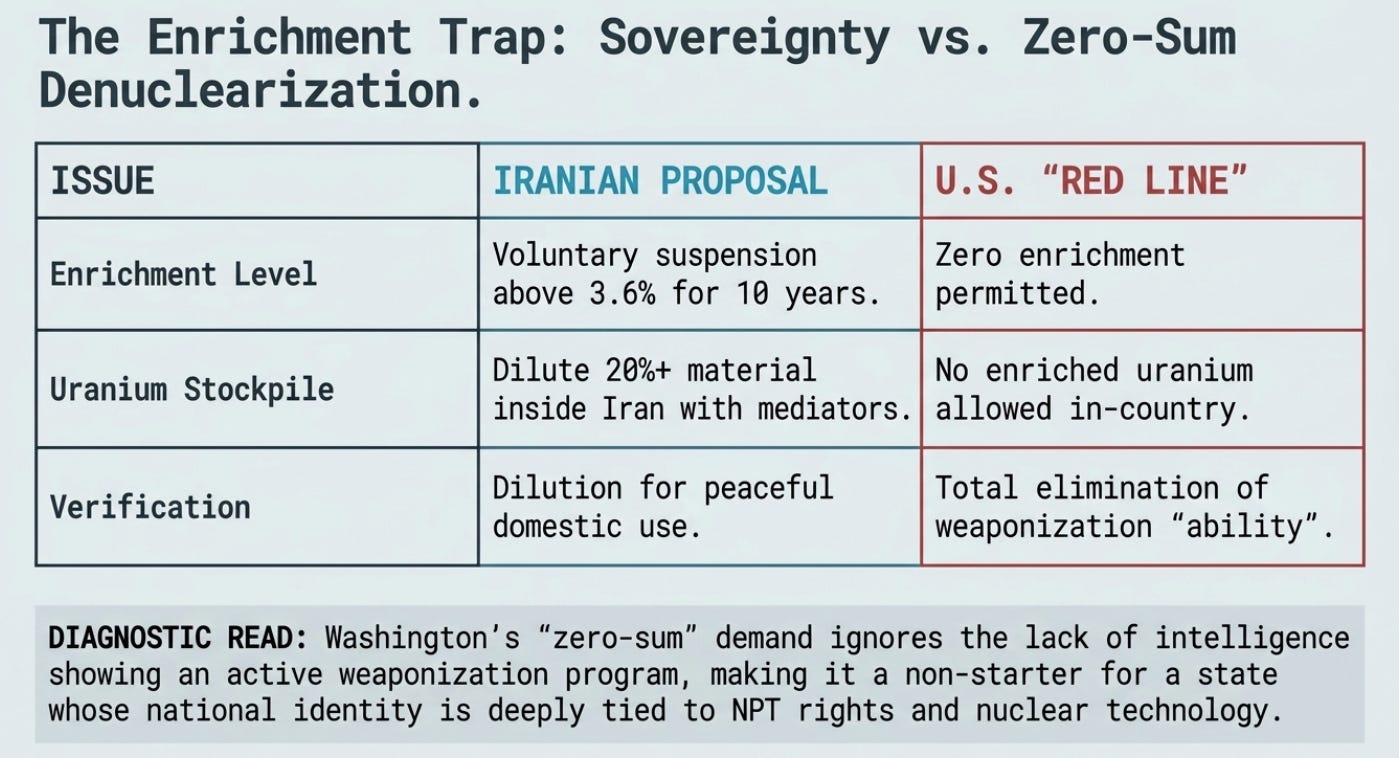
8. The Enrichment Trap: Sovereignty vs. Zero-Sum Denuclearization
The core dispute over uranium enrichment rights remains a seemingly unbridgeable “red line.” Tehran views enrichment as a sovereign right under the NPT, while Washington demands a total “zero-sum” outcome.
IA Image N.º9
Because the U.S. demand ignores the lack of intelligence showing an active weaponization program, it is a non-starter for a state that has tied its national identity to nuclear technology.
9. The Reparations Roadblock: Damages and Frozen Assets
Tehran considers the following economic demands non-negotiable for a return to the status quo:
Release of Assets: Immediate unfreezing of tens of billions in Iranian funds.
War Damages: An international mechanism for compensation regarding losses incurred during the conflict.
For a U.S. administration—especially one declaring military “victory”—it is a political impossibility to agree to pay “reparations” to an adversary it claims to have defeated. This economic standoff ensures the “Two-Track” disconnect remains total.
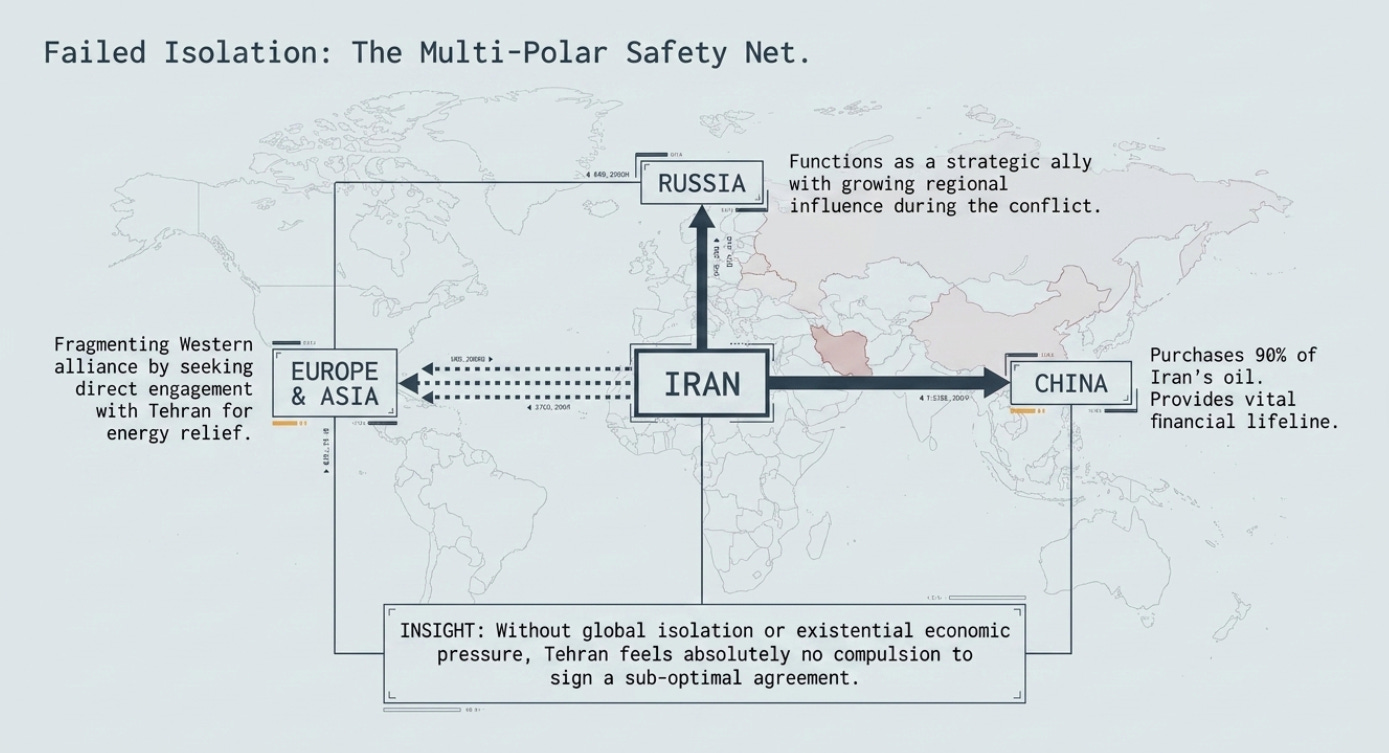
10. Failed Isolation: The Multi-Polar Safety Net
The failure of “Maximum Pressure” is due to the emergence of a robust multi-polar safety net. The U.S. has failed to isolate Iran, which has fragmented the Western alliance.
China: Purchases 90% of Iran’s oil, providing a vital financial lifeline.
Russia: Functions as a strategic ally whose regional influence has grown during the conflict.
Europe and Asia: Nations like France, Spain, Japan, and South Korea have begun seeking direct engagement with Tehran to secure energy relief, undermining Washington’s unilateral pressure.
Without existential pressure or global isolation, Tehran feels no compulsion to sign a sub-optimal agreement by May 31st. All indicators point toward a final holiday-weekend escalation rather than a diplomatic resolution.
IA Image N.º10
In conclusion
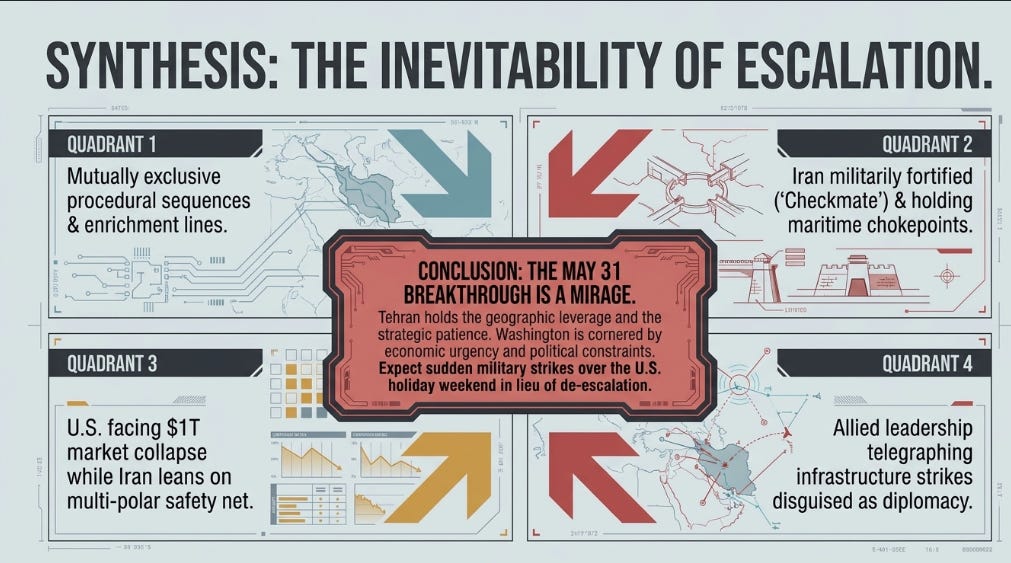
The source maintains that a diplomatic breakthrough before May 31st is a “mirage” due to structural and ideological obstacles that appear insurmountable.
The gap in the sequencing of negotiations—with Iran demanding a formal declaration ending the war and a lift of the blockade first, while the U.S. insists on a “Nuclear-First” track—has paralyzed the diplomatic process. Furthermore, the tactical superiority that Iran perceives from its continued control of the Strait of Hormuz and its military resilience despite “Operation Epic Fury” removes any incentive for Tehran to accept what it views as a “surrender-style” deal.
With a total historical mistrust where peace signals are interpreted as disinformation and current indicators pointing toward imminent military action rather than a truce, the most likely scenario for the end of May is not a resolution, but a decisive escalation in the conflict.
IA Image N.º11